
Morality, social responsibility among Rasul Medal criteria
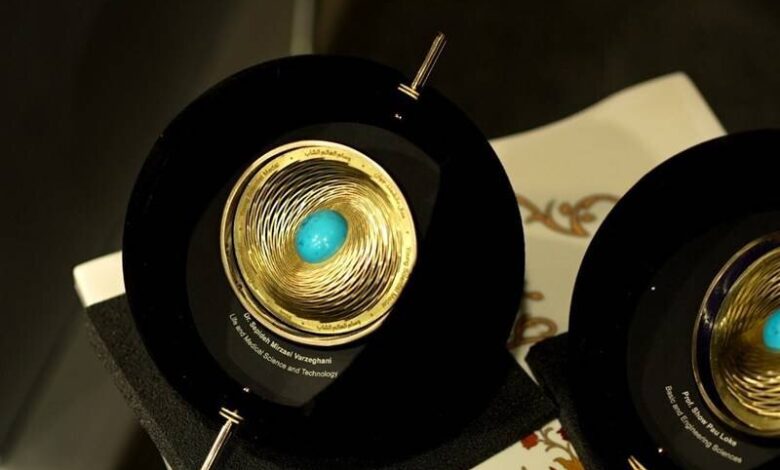
The head of the Life and Medical Science and Technology judging committee of the Rasoul(pbuh) Medal Gholamreza Hassanzadeh told local Iranian that the laureates are expected to possess strong moral and social qualities in addition to scientific achievements, emphasizing that a person who is not deeply concerned about their society and humanity at large is not fit to be selected for the Medal.
MSTF Media reports:
In an interview with the Mustafa Science and Technology Foundation (MSTF) media, Hassanzadeh elaborated on the judging process for Rasul Medal nominees. The initial evaluation covered 65,000 nominees and was conducted through in-person and online meetings with university professors of medical sciences.
The initial screening, carried out over 16 sessions, narrowed the pool to 20,000 nominees. A final committee meeting was then held to conduct a thorough assessment, resulting in the final shortlist.
“Every indicator was taken into account when evaluating these scientists in terms of qualitative and quantitative criteria,” Hassanzadeh added.
Asked whether the selection criteria were based on a scientist’s overall achievements or on a specific achievement or research publication, he explained, “The winners of the Rasul Medal, unlike the Mustafa(pbuh) Prize, are not selected based on a single outstanding achievement.
“These scientists are under 40 years old and have only recently begun their research careers. Our criterion was therefore more focused on the quality and significance of their achievements. For example, even if a paper they had published had not received many citations, it could still be considered a significant achievement if it had helped solve a problem facing a society.”
Regarding the most important criteria for selecting the final list of laureates, he stated, “Various quantitative and qualitative indicators, such as the H-index, were more relevant in the initial screening. In the later stages, we examined the original articles and the work that individuals had done, as well as patents.”
Hassanzadeh highlighted the importance of the tangible social impact of scientific achievements in selecting candidates for the Rasul Medal. “One of the essential characteristics of universities is social accountability, and every scientist must be accountable to their society and humanity as a whole. Therefore, we carefully considered criteria such as social accountability and individual impact. Every scientific work has inputs and outputs, but the most important question is how much impact it has on society and the extent to which it can help solve societal problems.”
The professor at the Faculty of Medical Sciences at the University of Tehran also discussed the total number of nominations received by the Rasul Medal secretariat. “Many eligible candidates were nominated, and the initial screening proceeded smoothly. Our colleagues at the Mustafa Foundation also provided considerable assistance by supplying accurate information and relevant indicators.”
Asked about the broader message that the final selection conveys to society, Hassanzadeh said, “A person selected as a young scientist for the Rasul Medal must possess strong moral, scientific, and social qualities. Scientific achievements are not the only criteria. A person who is not concerned about their own society and humanity as a whole cannot be considered for the Medal. Various aspects must be taken into account. When selecting candidates for an award named after the Holy Prophet of Islam, their morals and character are also important, and we sought to take these into consideration.”
He emphasized: “Our approach to selecting candidates was not inward-looking; rather, we sought to select everyone who was genuinely deserving. Anyone who met these criteria and passed the initial screening was also considered in the subsequent stages. Our working group did not adopt an exclusively national or international perspective.”
Rasul Medal
Upon the release of the call for nominations for the Rasul Medal, scientific institutions were able to nominate their candidates by January 20, 2026.
The Rasul Medal was founded based on the endowments made by Mustafa Prize laureates, Ugur Sahin, Omid Farrokhzad, and Vahab Mirrokni. It is awarded to scientists under the age of 40 residing in Islamic countries. The inaugural edition of the Medal, called the Young Scientist Medal, was held alongside the 6th Mustafa Prize in 2025.
The Medal is awarded to impactful works in the fields of Life and Medical Science and Technology, Basic and Engineering Sciences, and Computer Science by young scientists from Islamic countries. The candidates must be nominated by a third-party scientific or technological body, such as universities and research centers, reputable scientific and technological associations and institutions, academies of sciences, or science and technology parks.
The candidates for the Rasul Medal must be under 40 years old at the end of the year in which the medal is awarded. This means that candidates for the 2026 Young Scientist Medal must be born in 1987 or later. The winners are bestowed a medal, a certificate, and a $10,000 cash prize in each category.
Established as a symbol of excellence and scientific merit of the young generation of scientific talent, the Rasul Medal promotes scientific and technological breakthroughs by young scientists in the Islamic world and recognizes their influential achievements.
MNA
source: en.mehrnews.com


